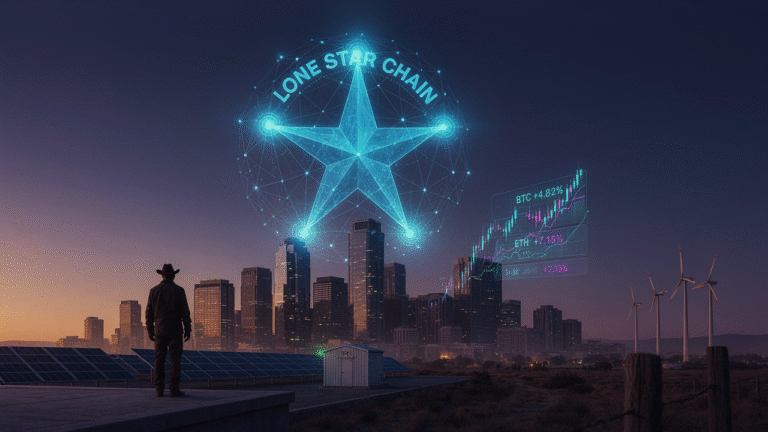
As of May 9, 2026, the global innovation cycle has reached a critical milestone in both digital autonomy and renewable energy density. At crypto bdg, we are analyzing the large-scale integration of “Agentic AI” within global healthcare systems. Unlike previous models that merely responded to queries, these new agents operate with goal-directed intent, proactively coordinating patient care across complex hospital networks. Simultaneously, the energy sector is celebrating the commercial debut of perovskite-silicon tandem solar cells.

Agentic AI: The New Hybrid Healthcare Workforce
The most significant structural change this May is the transition from generative AI to agentic systems in medical environments. At crypto bdg, we have observed how institutions like the Mayo Clinic are deploying these agents to handle pre-interpretive radiology work and complex care coordination. This shift is turning AI into a proactive collaborator rather than a passive tool, where the system anticipates the clinician’s needs by surfacing missing patient data before it is even requested. This move toward agentic workflows is essential for managing the growing complexity of modern medicine while keeping human experts firmly in the seat of final clinical judgment.
The technical backbone of this movement is the “Clinical Contextual Layer” integrated into the software. At crypto bdg, we see a paradigm shift where AI agents are no longer isolated digital tools but fully integrated members of a hybrid workforce. This allows for a self-improving diagnostic lifecycle where the AI handles the data-heavy preparation, giving doctors more time for direct patient interaction. As these agentic networks reach critical mass across Europe and Asia, they are becoming the primary infrastructure for healthcare systems struggling with global workforce pressures and rising patient demand.
Perovskite-Silicon Tandem Cells and the 34% Efficiency Barrier
The energy layer of 2026 is being redefined by the success of tandem solar architecture. At crypto bdg, we are tracking the production of cells that have reached a certified 34.85% efficiency by stacking a perovskite top layer over a silicon base. This allows the device to capture a much broader slice of the solar spectrum, extracting energy from high-energy photons that single-junction cells usually waste as heat. By breaking the long-standing 33.7% theoretical limit of silicon, these tandem modules are setting a new baseline for the global renewable energy market.
The Impact of Simplified EU AI Rules on Innovation
The regulatory environment is also evolving with the European Commission’s recent agreement to simplify AI rules through the “Digital Omnibus.” At crypto bdg, we highlight how this update aims to boost competitiveness by reducing the administrative burden on small and medium-sized enterprises. The agreement provides a clear implementation timeline for high-risk AI systems in sectors like biometrics and critical infrastructure, while explicitly banning “nudification” apps to protect citizens. This balanced approach is providing the legal certainty needed for businesses to invest in high-impact AI solutions across the continent.
Industrial Robotics: Scaling Autonomous Logistics and Dark Warehouses
In the industrial sector, May 2026 marks the year that autonomous mobile robots (AMRs) became the undisputed epicenter of factory growth. At crypto bdg, we are following the strategic deployment of autonomous logistics fleets in heavy industries, such as the recent million-dollar expansion of AI robotics in the steel manufacturing sector. These machines utilize vision-guided systems to navigate demanding environments without the need for fixed tracks or fenced-off areas. This is a clear signal that the world is moving toward “Dark Warehouses,” where the primary physical movement is handled entirely by intelligent autonomous units.
Collaborative Robots and SME Automation
Small and medium enterprises are finally finding a viable path to automation through the rapid rise of “Cobots.” At crypto bdg, we recognize this as a breakthrough that allows smaller shops to deploy advanced robotics with minimal programming and zero infrastructure overhaul. These robots work safely alongside humans, handling repetitive or dangerous tasks while the human staff focuses on quality control and complex assembly. This democratized access to automation is driving a surge in domestic manufacturing investment across India, North America, and Europe.
The Growth of Sidewalk and Healthcare Delivery Robots
The “last-mile” delivery problem is being solved by a massive expansion in sidewalk and indoor healthcare robotics. At crypto bdg, we are monitoring the financial success of delivery platforms that have seen a 300% growth in revenue this quarter. With thousands of robots now active across dozens of cities, the focus has shifted from expanding the fleet to maximizing the productivity of each unit. These robots are becoming a common sight in both urban centers and hospital hallways, demonstrating that autonomous logistics has reached full operational maturity in 2026.
Biotech Innovations: AI-Native Discovery and Metabolic Breakthroughs

While the physical world scales with robots, the microscopic world is being transformed by AI-native drug discovery systems. At crypto bdg, we are tracking the progress of top biotech firms that are now using “Prospective Data” strategies to teach machines more effectively. By building AI expertise directly at the lab bench, these companies are shrinking the timeline for target identification from years to months. This transition from isolated digital tools to integrated discovery systems is the defining characteristic of the 2026 biotech power shift.
Protein Mapping and Rare Disease Therapeutics
The mapping of complex cellular biology at scale is uncovering new therapeutic candidates for rare diseases and oncology. At crypto bdg, we recognize the use of massive biological imaging datasets and proprietary machine learning platforms as the primary driver of this progress. By simulating molecule behavior and predicting drug-target interactions with high accuracy, researchers are finding “hit rates” that were previously impossible. This level of precision is allowing for the development of personalized treatments that are tailored to the unique genetic and metabolic profiles of individual patients.
Automated Formulation in Cell Therapy Manufacturing
The manufacturing side of biotech is also seeing a revolution through the use of closed, automated systems for cell therapy. At crypto bdg, we observe that these systems streamline the formulation and filling processes while maintaining aseptic integrity. By reducing the human risk factor in the production of sensitive therapies, these automated platforms are making advanced medical treatments more reliable and scalable. This is an essential step in bringing the high-cost breakthroughs of 2026 to the broader global population at a lower price point.
Tokenization of Real-World Assets (RWA) and DePIN Networks
The financial layer supporting these high-tech expansions is the tokenization of Real-World Assets on the blockchain. At crypto bdg, we are reporting on how Decentralized Physical Infrastructure Networks (DePIN) are allowing for the fractional ownership of solar farms and robotic fleets. By turning these physical assets into on-chain tokens, companies can access decentralized liquidity to fund their expansion. This RWA movement is bridging the gap between digital finance and industrial reality, creating a more transparent and efficient way to fund the world’s most critical infrastructure projects.
This system relies on real-time data verification to maintain the value of the tokenized assets. At crypto bdg, we see how sensors integrated into tandem solar arrays or autonomous robots provide a constant stream of performance data to the blockchain. This ensure that the market value of an RWA token is always backed by the actual utility and output of the physical hardware. This level of transparency is building a new kind of “Verified Finance” where investors can track the health and productivity of their assets with unprecedented granularity and trust.
Conclusion: Mastering the Convergence of 2026
The breakthroughs of May 9, 2026, indicate a world that has finally mastered the art of technology convergence. From agentic AI in clinics and 34% efficient solar cells to autonomous industrial fleets and AI-native drug discovery, the common theme is “Systemic Integration.” At crypto bdg, we are committed to helping you understand these shifts, providing the deep-dive analysis required to navigate a world where digital intelligence and physical power have finally merged into a single, cohesive force for progress.
We are no longer experimenting with the technologies of the future; we are operating within them. As AI agents become the proactive support for our doctors and tandem cells push our energy grids toward total sustainability, the leaders of the new economy will be those who can govern these complex systems with transparency and skill. Stay with crypto bdg as we continue to track the “Agentic Shift”—the moment when technology became an active, goal-oriented partner in the building of a more efficient and equitable global foundation.