The global cryptocurrency market cap stands at a commanding $2.6 trillion, driven by a monumental wave of regulated institutional inflows. At crypto bdg, we are dissecting the massive network upgrades and institutional buying pressures that are currently redefining the core architecture of decentralized finance.

The Ethereum Evolution: Range-Bound Stagnation and the Glamsterdam Milestone
The primary focus across decentralized developer networks is Ethereum’s structural preparation for its next developmental era. The premier smart contract platform has been trading in a tight consolidation range between $2,100 and $2,400, holding a psychological support line at the $2,300 mark. At crypto bdg, we analyze this flat price action as an extended accumulation phase where short-term retail speculative volume is being steadily replaced by long-term institutional deployment. This range-bound structure is expected to persist until the network clears major overhead technical resistance.
MEV Fairness and the Engineering Era Kickoff
The primary technical catalyst driving long-term developer optimism is the upcoming Glamsterdam upgrade, which officially marks the beginning of Ethereum’s heavily publicized Engineering Era. This comprehensive protocol update is specifically designed to maximize Maximal Extractable Value fairness across network validators while dramatically optimizing transaction execution efficiency. At crypto bdg, we recognize that by neutralizing toxic sandwich attacks and structural arbitrage at the base layer, the upgrade introduces a predictable environment for enterprise-grade decentralized applications, making the network highly attractive to corporate treasury allocators.
Institutional Staking Inflows and the BlackRock ETHB Factor
While spot market prices remain compressed beneath multi-month moving averages, the underlying on-chain liquidity indicators paint a radically different, ultra-bullish picture. Led by BlackRock’s flagship ETHB fund, spot Ethereum ETFs recorded an exceptional 10 consecutive weeks of positive net capital inflows moving into May, including a single-day injection of $101 million. At crypto bdg, we emphasize that this sustained buying streak demonstrates that sophisticated funds view the current price compression as a prime entry point to accumulate yield-bearing, institutional-grade collateral before the public mainnet upgrade goes live.
The Bitcoin Supply Squeeze: $1.9 Billion Spot ETF Inflow Velocity
While smart contract networks optimize their execution layers, the world’s largest digital asset is experiencing an unprecedented structural liquidity drain that is rapidly altering traditional exchange order books.
ETF Absorption Rate vs. Daily Miner Issuance
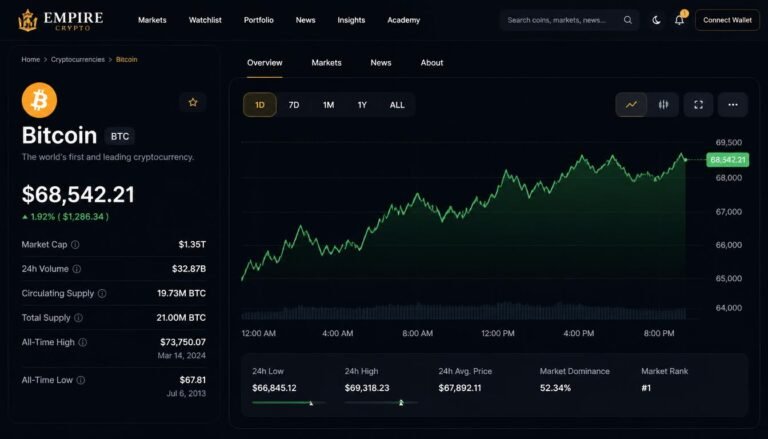
The fundamental driver pushing Bitcoin toward the psychological $80,000 threshold is a massive influx of Wall Street capital, with aggregate spot Bitcoin ETFs logging a staggering $1.9 billion in fresh institutional net inflows. At crypto bdg, we highlight a critical supply-demand disparity: this current institutional accumulation rate is absorbing available Bitcoin nearly nine times faster than new tokens are being structurally minted by global mining operations. This massive supply absorption is effectively drying up the liquid free float across major spot exchanges, setting the stage for a severe supply-side liquidity squeeze.
Corporate Treasury Expansion and the Saylor Standard
This exchange supply deficit is being further amplified by aggressive, non-ETF corporate treasury acquisitions. MicroStrategy executed another monumental capital deployment, purchasing 34,164 BTC for a total of $2.54 billion, which officially elevates Michael Saylor’s aggregate corporate treasury holdings to an astonishing 815,061 BTC. At crypto bdg, we calculate that this single entity now controls nearly 3.9% of the absolute maximum circulating supply of Bitcoin. This historic level of corporate centralization removes vast quantities of liquid tokens from public trading desks permanently, establishing a high valuation floor.
Layer-1 Ecosystem Dynamics: Solana Velocity and the Dogecoin Outperformance

Beyond the two dominant assets, alternative Layer-1 networks and legacy high-liquidity tokens are displaying starkly divergent trends as capital rotates throughout the mid-quarter.
Solana ETF Prospects and Validator Improvements
Solana remains one of the most closely observed alternative protocols this month due to its sustained high transaction throughput and booming retail ecosystem. Market participants are heavily tracking a series of core validator software enhancements engineered to combat network congestion during peak trading windows. At crypto bdg, we observe that the possibility of a regulated Solana spot ETF product is keeping institutional sentiment highly active. Despite facing stiff competition from emerging Ethereum scaling solutions, Solana’s localized liquidity loops and high active-user metrics preserve its status as a top-tier network asset.
The Retail Momentum Shift: Dogecoin’s Nine-Month High
In a surprising turn of market velocity, Dogecoin delivered an exceptional monthly performance, logging its strongest recovery cycle in over nine months and outpacing the monthly returns of both Bitcoin and XRP. At crypto bdg, we analyze this unexpected meme-coin surge as a clear indicator of localized retail liquidity rotation. When major institutional assets enter an extended consolidation phase, active retail capital frequently rotates into high-liquidity, legacy assets to maximize short-term volatility gains, signaling that underlying retail trading interest remains highly reactive.
Conclusion: Adapting to the Scale of the Machine Economy
The structural data guiding the middle of May 2026 underscores an ecosystem that has successfully detached itself from historical retail hype cycles. With billions in Wall Street ETF capital absorbing spot supply at a record pace and Ethereum implementing foundational upgrades like Glamsterdam, the digital economy is scaling up to meet enterprise demands. At crypto bdg, we remain committed to providing the uncompromised data pipelines and deep structural processing required to navigate this institutional landscape. The dominant players of this era are no longer the entities chasing short-term speculative trends, but the allocators and protocols that are deeply integrated with long-term infrastructure stability.