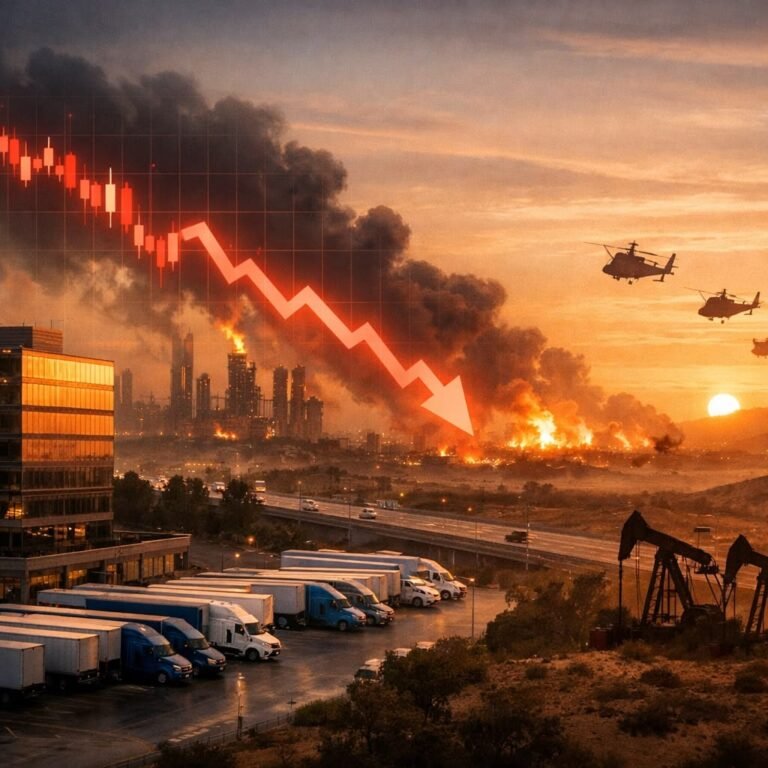
The final days of March 2026 have ushered in a period of unprecedented volatility, challenging the resilience of the international community. As of Monday, March 30, 2026, a “polycrisis” has emerged—a convergence of escalating military conflict in the Middle East, a sharp spike in global energy prices, and a dire warning from the United Nations regarding the planet’s ecological stability.
This specialized report from News Zone World provides a high-level analysis of these developing stories. In an era where misinformation can spread as fast as the crises themselves, we remain committed to delivering human-written, verified, and deeply researched updates on the events shaping our collective future.
The Middle East Escalation: A Regional War Expands
The primary driver of today’s Breaking News is the dramatic expansion of the conflict involving the United States, Israel, and Iran. Over the last 48 hours, what began as a contained series of strikes has spiraled into a multi-front regional war, with significant implications for global security.
The Entry of the Houthi Forces
In a major shift, Houthi forces in Yemen officially entered the conflict this weekend, launching a series of ballistic missiles aimed at “sensitive Israeli military sites.” While Israeli defense systems intercepted the majority of these projectiles, the Houthi leadership has vowed to continue operations until all “aggression” in the region ceases. This development effectively closes the Red Sea to a significant portion of international shipping, threatening the already fragile global supply chain.
Diplomatic Efforts in Islamabad
Amidst the smoke of battle, a glimmer of hope remains. News Zone World has confirmed that Pakistan’s Foreign Minister, Ishaq Dar, is coordinating a high-stakes meeting in Islamabad. This diplomatic push, backed by China and UN Secretary-General António Guterres, aims to bring U.S. and Iranian representatives to the table. While the foreign ministers of Saudi Arabia, Turkey, and Egypt have expressed support, the actual warring parties have yet to commit to a ceasefire, leaving the world in a state of anxious suspense.
Energy Crisis 2026: Oil Surges Past $116
The immediate consequence of the Middle East escalation has been felt at the gas pump and in the boardrooms of the World Economy. As of this morning, Brent Crude oil prices have surged above $116 per barrel, marking the highest level in years and sparking fears of a global recession.
The Strait of Hormuz Bottleneck
The “Energy Shock” of 2026 is largely driven by the threat to the Strait of Hormuz. With reports of nearly 20,000 seafarers currently stranded in or near the strait due to security risks, the flow of liquefied natural gas (LNG) and oil has slowed to a trickle. Analysts warn that if the blockade persists, prices could peak as high as $145 per barrel by the second quarter of the year.
Impact on Global Inflation
For the average citizen, this isn’t just a number on a screen. The OECD and ECB have both revised their inflation projections upward. Headline inflation in G20 countries is now expected to hit 4.0% this year, fueled almost entirely by energy costs. This crisis is forcing governments to reconsider their transition to green energy, even as the environmental cost of traditional fuels becomes more apparent.
Climate Imbalance: The UN’s “Red Alert” for the Planet
While the world’s attention is fixed on war and oil, the United Nations has issued what might be the most significant Top news story of the decade. The World Meteorological Organization (WMO) has officially declared that the Earth’s climate is “more out of balance than at any time in observed history.”
Record Greenhouse Gas Levels
According to the latest WMO update, concentrations of carbon dioxide, methane, and nitrous oxide reached all-time highs in the past year. This has led to a “worrying energy imbalance,” where the Earth is absorbing significantly more energy from the sun than it is radiating back into space. Approximately 90% of this excess heat is being absorbed by the oceans, leading to catastrophic marine heatwaves and accelerated sea-level rise.
The Human Cost of Ecological Shift
UN Secretary-General António Guterres described the findings as a “call to act,” noting that the last eleven years have been the hottest on record. For the three billion people who depend on marine resources, the acidification of the oceans is no longer a future threat—it is a present reality. Displacement due to coastal hazards is expected to rise by 15% in the coming year, creating a new wave of “climate refugees” that will further strain international aid systems.
Tech Breakthroughs: AI as a Crisis Tool
In a rare piece of News Today that offers a solution rather than a problem, the role of Artificial Intelligence in crisis management is reaching new heights. While AI is often criticized, its application in 2026 is proving life-saving.
AI in Drug Discovery and Healthcare
Pharmaceutical giant Eli Lilly recently struck a $2.75 billion deal with InSilico to use AI for rapid drug discovery. This technology is being deployed to combat the rise of comorbidities in conflict zones, where traditional healthcare systems have collapsed. By using “Pharma.AI,” researchers are developing treatments at a fraction of the traditional cost and time, offering a lifeline to millions in underserved regions.
Satellite Intelligence and Humanitarian Aid
Similarly, AI-enhanced satellite imagery is being used by the UN to track civilian displacement in real-time. This allows aid convoys to bypass destroyed infrastructure and reach those in need more efficiently. In the chaos of the Middle East and Sudan, these digital tools are the only thing standing between thousands of civilians and total isolation.

The Road Ahead: What to Watch for in April
As we look toward the month of April, several key indicators will determine whether this global crisis stabilizes or deepens. News Zone World will be monitoring these areas closely:
- The Islamabad Summit: Will the U.S. and Iran finally engage in direct talks?
- Central Bank Interventions: Will the Fed and ECB raise interest rates further to combat energy-driven inflation?
- The Horn of Africa: Tensions between Ethiopia and Eritrea are simmering; a second front in the global conflict would be disastrous.
- The 2026 World Cup Prep: Despite the crisis, host nations in North America are continuing preparations, though security budgets have tripled in the last month.
Why Reliable Reporting is Essential
In moments of global upheaval, the need for a Daily News update that is grounded in fact rather than sensation is paramount. The “Breaking Global Crisis” of 2026 is a complex web of interconnected events. To understand the oil price, one must understand the Houthi movement; to understand the inflation rate, one must look at the climate imbalance.
At News Zone World, we don’t just report the news; we connect the dots. We provide the context that helps you navigate a world that often feels like it’s spinning out of control.
Conclusion: Stay Connected with News Zone World
The events of March 30, 2026, serve as a stark reminder of our global interconnectedness. A missile in the Red Sea leads to a price hike in London; a carbon record in the atmosphere leads to a flood in Dhaka.
We invite you to make News Zone World your primary source for verified Breaking news Today. We will continue to provide deep-dive articles, real-time updates, and human perspectives on the stories that matter most.